
The Great American Think-Off
Experience our nationally-renowned, in-person philosophy contest and debate in New York Mills, MN, on the second Saturday in June. Take part by entering an essay for your chance to be on stage debating the annual question and being named America's Greatest Thinker!
Featured On






Next Think-Off on Saturday, June 13, 2026
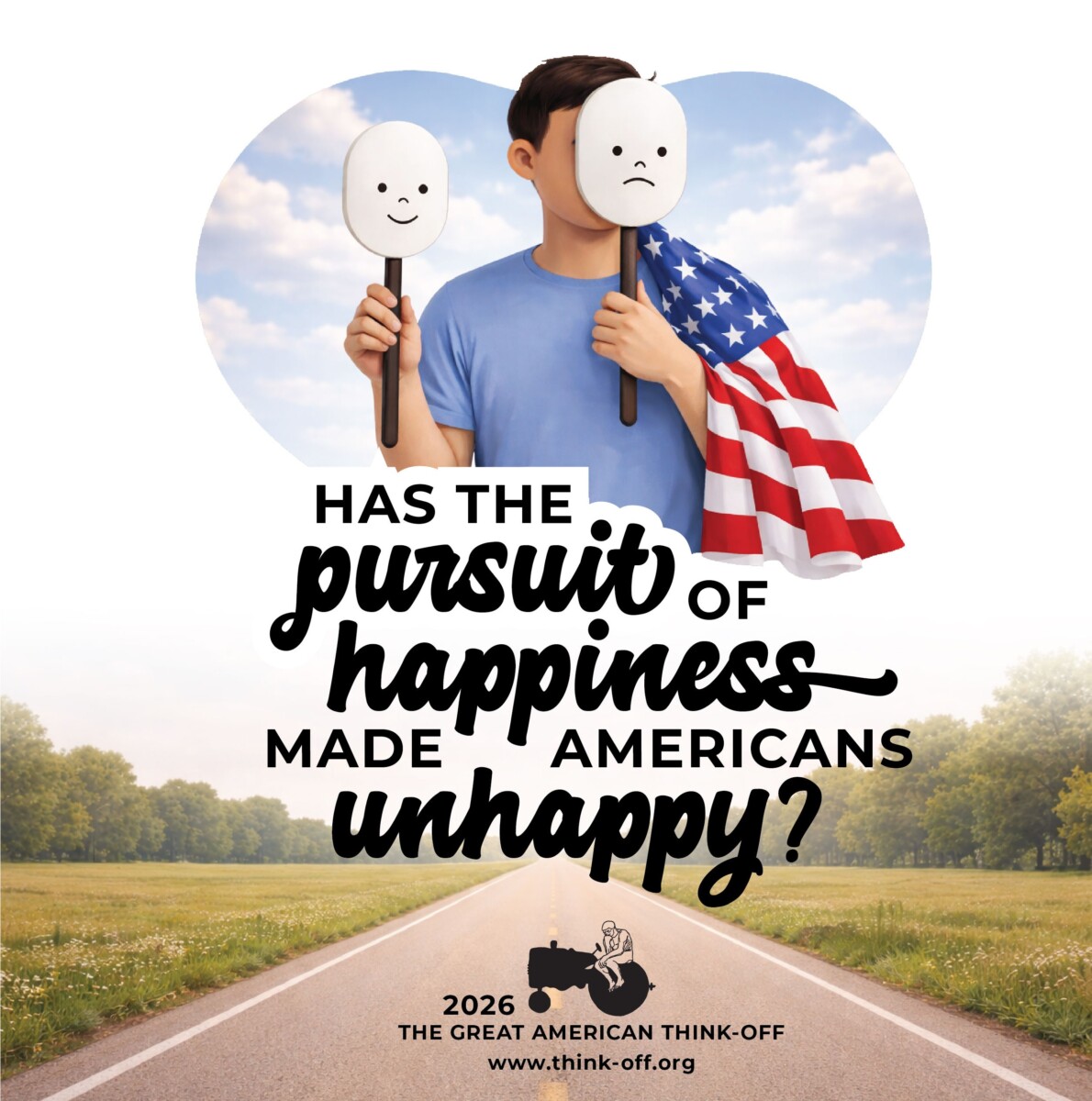
2026 Question: Has the pursuit of happiness made Americans unhappy?
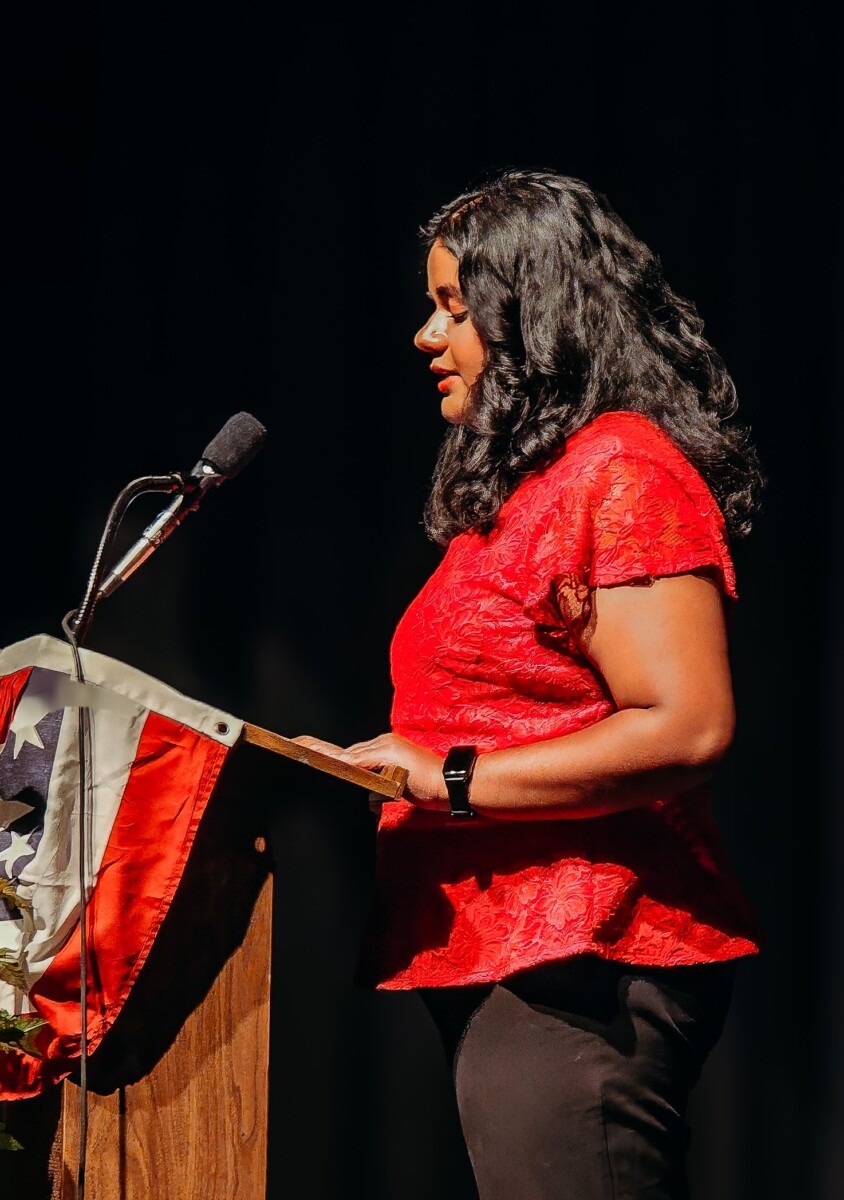
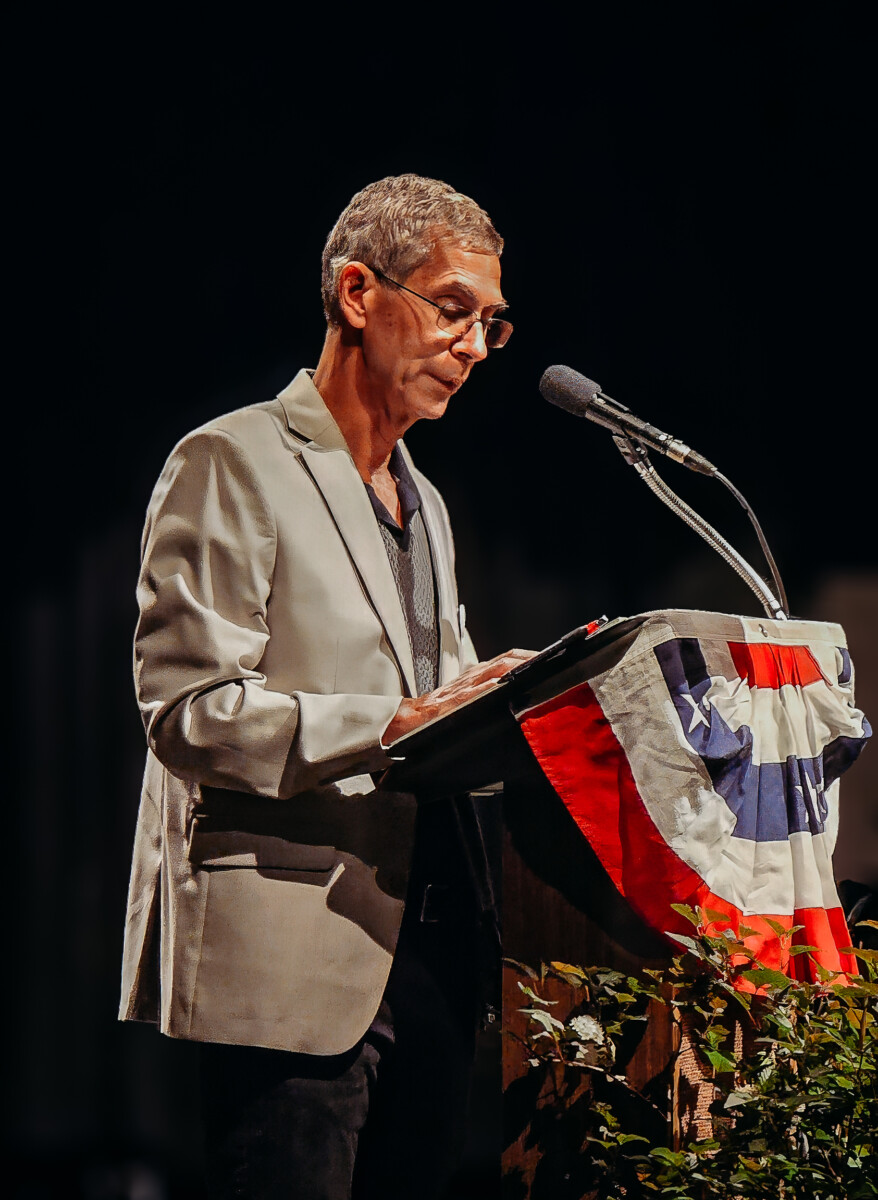
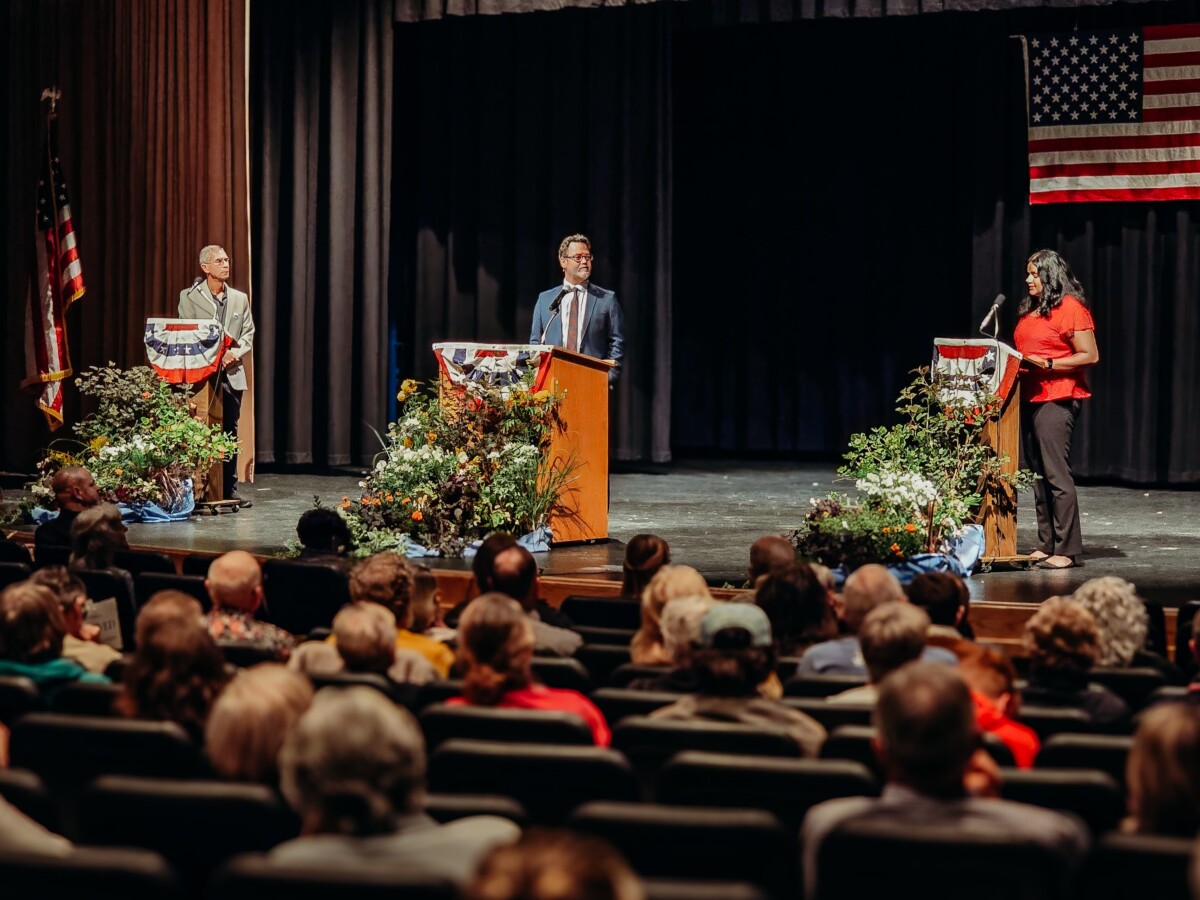
Join us for the 33nd Annual Great American Think-Off on Saturday, June 13, 2026 at 7 PM at the New York Mills School Auditorium. Four finalists will present their arguments live, and the audience will decide who earns the title of America’s Greatest Thinker.
Annual Schedule of Events
January 15 – Annual question announced & essay submission opens
April 1 – Essay submission deadline
May 1 – Finalists announced
Second Saturday in June – Live debate at New York Mills School Auditorium at 7pm, with reception at the Cultural Center following.
How to Apply
- People of all ages and backgrounds are encouraged to submit an essay of no more than 750 words. Entrants should take a strong stand, basing their arguments on personal experience and observations rather than philosophical abstraction.
- Four writers will be selected as finalists, awarded $500 each, and participate in the live debate to ultimately answer the question, with the winner determined by audience vote. Costs for winners’ travel (within the United States), food, and lodging will be covered by the Cultural Center.
- To participate, submit an essay online between January 15-April 1 via our online form, or by email to info@think-off.org, or by mail to Think-Off, c/o Cultural Center, P.O. Box 246, New York Mills, MN 56567. There is no fee to enter, however, we welcome donations to help us continue to support civil discourse and big thinking in rural America.
About The Great American Think-Off
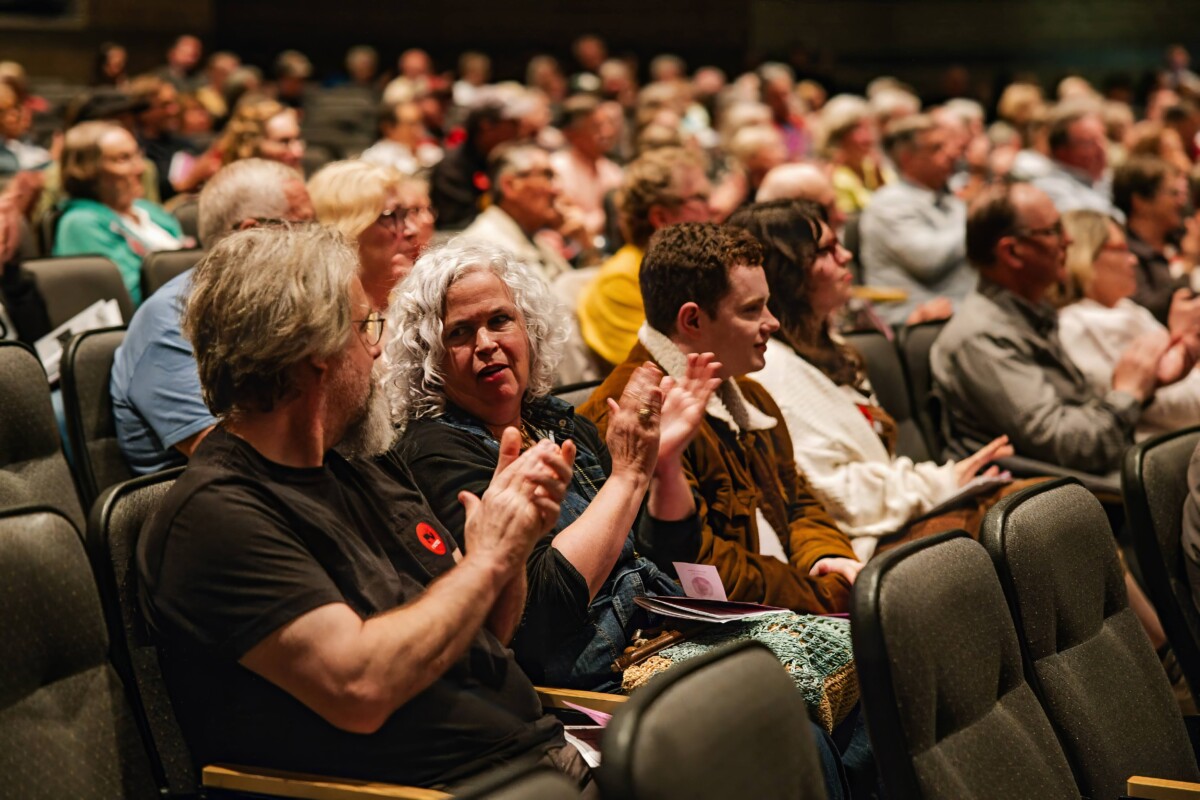
The Great American Think-Off is an exhibition of civil disagreement between powerful ideas that connect to your life at the gut level. The Cultural Center, located in the rural farm and manufacturing town of New York Mills, Minnesota, sponsors this annual philosophy contest.
The Think-Off was started by Cultural Center founder John Davis and has been held annually since 1993.
Past Questions
Since 1993, the Think-Off has explored life’s biggest questions:
2026: Has the pursuit of happiness made Americans unhappy?
Essays are due April 1, finalists are announced May 1, and the 33rd annual Think-Off debate is held Saturday, June 13, 2026.
2025: Is there only one truth, or are there many truths?
Many Truths Prevail: Before a record-setting audience of nearly 300 in rural New York Mills—and hundreds more tuning in via livestream—four citizen-philosophers took the stage to tackle this timeless and timely question.
By the end of the night, the audience had cast its votes for who made the strongest argument, choosing David Lose, a pastor from Eden Prairie, MN, as America’s Greatest Thinker 2025, siding with his argument that there are, indeed, many truths.
2024: Is freedom of speech worth the cost?
YES: Freedom of speech IS worth the cost. First-time Think-Off entrant Michelle Mellon of New Mexico was voted America’s Greatest Thinker for 2024, arguing that open opportunities to exchange ideas come with infinite potential for “disruption,” in which personal and social evolution is achieved—moving us each, in our own way, closer to realizing the promise of living life to its “fullest potential.”
2023: Which is more important to protect: the environment or the economy?
THE ENVIRONMENT: Doug McClain of Fergus Falls, MN successfully argued that the environment is more important to protect than the economy, stating that the environment will run without our economy, but without the environment, our economy and those in it will cease to exist.
2022: Which should be more important: personal choice or social responsibility?
SOCIAL RESPONSIBILITY: Blaine Rada of Darien, IL claimed his second “America’s Greatest Thinker” title (the first was in 2005), arguing that “personal choice is often self-driven and self-focused; the greatest, longest-lasting benefits come through social responsibility.”
2021: Which is more important: to win or to play by the rules?
RULES: Dan Tschida of Minneapolis, MN successfully argued his stance that playing by the rules is more important than winning.
2020: No debate held due to COVID-19 global health pandemic.
2019: To vote or not to vote: does it matter?
YES: Minnesotan Jennifer Nelson earned her second “America’s Greatest Thinker” title (her first was in 2014) by successfully arguing that voting DOES matter. Jennifer, a research consultant at the Minnesota House of Representatives, convinced the audience that voting matters because it is an essential part of the overall democratic process.
2018: Which plays a larger role in shaping one’s life: success or failure?
FAILURE: Anthony Berryhill of Austin, TX won over the crowd with his skillful argument that failure plays a larger role in shaping one’s life, saying, “Embracing losing is what allows us to take risks, be vulnerable and be pioneers.”
2017: Has the 2016 election changed our perception of truth?
YES: In the final round, Pamela Lewis distilled her debate performance and won the majority of audience votes with a paraphrase of John F. Kennedy and her own exposition from his quotation, “We cannot be a fully free society and we cannot be fully human unless we protect our need and our quest for the truth.”
2016: Income inequality threatens democracy: agree or disagree?
AGREE: Sam Dennison of San Francisco, CA argued in favor of the proposition, saying, “When wealth changes how we see and interact with each other, that’s where the problem comes in.” The audience voted Sam the Greatest Thinker in America and decided that Income Inequality DOES indeed Threaten Democracy.
2015: Does technology free us or trap us?
FREES: David Lapakko of Richfield, MN, asserted that technology frees us, and was voted America’s Greatest Thinker for 2015. Lapakko won the support of the audience by focusing on the many technological advancements in the fields of medicine, transportation, electricity, and more, that do indeed free us to live more full and rewarding lives.
2014: Love or fear: which motivates us more?
LOVE: Jennifer Nelson of Morris, Minnesota based her case on her personal experience recovering from an automobile crash in 2004, and effectively convinced an enthusiastic crowd that love motivates us to act more than fear.
2013: Which is more ethical: sticking to principle or being willing to compromise?
COMPROMISE: Paul Terry, CEO of StayWell Health Management, won the hearts of the audience with his argument that compromise is more ethical than sticking to principle. Compromise is hard work he told his opponent, Caroline Sposto, in the final round. “Achieving a compromise is actually the best way to stick to my principles,” he added. The Great American Think Off, now in its 21st year, was broadcast live on Lakes Radio.
2012: The nature of humankind: inherently good or inherently evil?
EVIL: This was the first question of the Think-off posed in 1993 and the audience couldn’t decide. Twenty years later Adam Bright of Syracuse, New York made a compelling argument that humankind is inherently evil.
2011: Does poetry matter?
YES: Marsh Muirhead won the 2011 debate saying yes, poetry matters. Muirhead, a dentist and a poet from Bemidji, Minnesota, used as proof the strong example of the popularity and quality of the poetry of former American poet laureate Billy Collins. His opponent, Mahmood Tabaddor of Rochester, Michigan argued that poetry no longer matters to the large majority of Americans who prefer reality shows on television and fantasy novels to pass the time. The audience, however, voted that yes, poetry does matter.
2010: Do the wealthy have an obligation to help the poor?
NO: David Eckel of Clayton, North Carolina, argued No – not because he’s callous or because he’s opposed to giving. He argued that charity isn’t charity if you’ve got no choice. With that, he won the crowd.
2009: Is it ever wrong to do the right thing?
YES: John Pollock, a civil rights attorney from Montgomery, Alabama said yes, is it sometimes wrong to do the right thing. He argued that unintended consequences from our belief that we are doing the right thing can lead to greater evil than we can foresee. In the end, the audience agreed that what is right, at least in America, is an evolving set of ideas, not a static set of principles that never changes.
2008: Does immigration strengthen or threaten the United States?
THREATENS: Craig Allen of West Linn, Oregon said it threatens. He argued, and the audience agreed, that the system of immigration and immigration policy is broken. He says it encourages an influx of illegal immigrants and poses a threat to the country.
2007: Which should you trust more: your head or your heart?
HEART: Joe Kaiser of Minneapolis, MN was the winner of the 2007 debate. Kaiser’s advice: trust your heart. A first time entrant, he ended up competing against his friend, Paul Allick, an ordained priest from Burnsville, MN.
2006: Which is more valuable to society: safety or freedom?
FREEDOM: Sarah Dennison of Minneapolis, Minnesota was the winner. Sarah pointed out that freedom requires courage but that for the future of humanity we must put freedom first.
2005: Competition or cooperation: which benefits society more?
COOPERATION: Blaine Rada, a 40 year old training consultant from Brookfield, Illinois was the winner arguing that Cooperation Benefits Society More. In his closing argument Blaine quoted John F. Kennedy when he said “United there is nothing we can’t do, divided there is nothing we can.”
2004: Should same sex marriages be prohibited?
NO: Robert Lerose said no. He said that marriage is the one enduring institution common to all societies throughout history and pointed out that it can change, and in fact has changed, without diminishing its meaning. The 44 year old writer from Uniondale, New York convinced the small town audience of New York Mills, Minnesota that the exclusive commitment of two people to each other, regardless of gender, could only strengthen the custom of marriage.
2003: Do we reap what we sow?
YES: Brad Buschette said yes and the audience agreed. He said we each have our own internal ethical system that rewards or punishes us on the basis of our actions. The more highly developed that system is, the more obvious it is that we reap what we sow.
2002: Is the pen mightier than the sword?
NO: Paul Higday of Richmond, Virginia said No. It’s not a matter of which has the right, but which has the might. In today’s world it takes the sword to change societies so the pen can flourish.
2001: Should assisted suicide be legal?
YES: Mary Fishler-Fisk of Massachusetts argued for legalization, winning this provocative and often poignant debate with a mere 10 vote lead.
2000: Is democracy fair?
YES: With this debate taking place in June of 2000, the Great American Think-Off was ahead of its time considering the issues that evolved during more recent presidential elections. Both voting audiences; the community audience at the New York Mills Sports Center and the C-SPAN online audience, voted that Peter Hilts’ argument that “YES, DEMOCRACY IS FAIR” was the winner. Hilts is an environmental studies teacher from Lakeville, Minnesota.
1999: Which is more dangerous — science or religion?
SCIENCE: The 1999 Think-Off received essays from contestants in Pakistan, Denmark, Argentina and all over the United States. Mark Friestad, a social studies teacher from North Dakota, won the final debate arguing that science is more dangerous because people often accept it blindly without question.
1998: Is honesty always the best policy?
NO: A record year, the 1998 Think-Off received over 820 essays, and the final debate was broadcast live on C-SPAN. As the country grappled with the spectacle in the White House, the Think-Off audience and the C-SPAN viewing audience agreed with a soft-spoken priest from New York–honesty is not always the best choice.
1997: Is the death penalty ethical in a civilized society?
NO: The 1997 Think-Off received entries from 45 states. The 2001 Think-Off spokesperson, Steve Schulz won by explaining how even though his father was murdered, he feels the death penalty is unethical.
1996: Does God exist?
YES: The 1996 Think-Off received over 700 entries from throughout the U.S. After an engaging debate, the audience vote (with many abstentions) decided that God does exist.
1995: Money or morality — which does society value more?
MONEY: A 66 year-old retired stenographer and a 16 year-old Eagle Scout argued morality, but were toppled by a graduate student and a UPS worker arguing that money is the most important value in America.
1994: Does life have meaning?
YES: A close debate, but ultimately it was decided that life does have meaning–as proven by commercial fisherman Peter Hilts.
1993: The nature of humankind: inherently good or inherently evil?
UNDECIDED: A priest, a newspaper editor, a 15 year-old cheerleader and a former tribal police officer made such strong arguments that the audience couldn’t decide if mankind is good or evil, leaving the question forever unresolved. (…Until 2012 when it was debated again, and evil won.)
Media & Legacy
The Think-Off has been featured in The Washington Post, NPR, MPR News, Star Tribune, The New York Times, and more.
VIDEO
2024: 31st Annual Great American Think-Off Debate on YouTube
2023: 30th Annual Great American Think-Off Debate on YouTube
2022: 29th Annual Great American Think-Off debate on YouTube
2021: 28th Annual Great American Think-Off debate on YouTube
2020: Facebook Watch Party of The Great American Think-Off documentary film hosted by Director Nik Nerburn: TRT 55:35 (2019), featuring the 2018 Great American Think-Off.
2019: The Great American Think-Off documentary directed by Nik Nerburn
Follow along as a stay-at-home mom from Nashville, a chess champion from Virginia Beach, a business consultant from Austin, and a barista from New Orleans are all pitted against one another, publicly pondering the 2018 question: what has more of an impact on shaping one’s life – success or failure? “The Great American Think-Off” is a new documentary about one small town with lots of big ideas. Directed by Nik Nerburn TRT 55:35 2019
2018: 2018 Think-Off Debate on YouTube
2015: Leif Wallin on The Moth talking about his experience with the Think-Off
2014: Lakeland Public Television announces 2015 question
2011: Lakeland Public Television story on Marsh Muirhead
2000: C-SPAN – Is Democracy Fair?
1999: C-SPAN – Which is More Dangerous – Science or Religion?
AUDIO
2024: MPR News: In New York Mills, the Great American Think-Off finalists debate to understand, not to win
2023: Radio interviews about the 2023 Think-Off on It Takes 2 with Amy & JJ of KFGO 790 AM:
2021: WCCO Radio Real Talk with Roshini – Which is more important: to win or to play by the rules?
2014: MPR documentary by Evan Johnson
2012: Short radio interview of Marsh Muirhead returning to Think-off
2007: American Public Media Joe Kaiser reading his essay
1996: NPR Interview
PRINT & ONLINE
2024: Great American Philosophy substack by JILL LOUISE LÉGER
2021: Washington Post Magazine, Amateur philosophers compete in the Great American Think-Off
2021: University of Minnesota Alumni Magazine, The Great American Think-Off
2015: TwinCities.com, Minnesota’s Great American Think-Off asks: ‘Does tech free us or trap us?’
2013: StarTribune, Think-Off Goes Beyond Questions
2012: WCCO, 4 Finalists Named For Great American Think-Off
2012: examiner.com, Writing leader thinks on feet for Great American Think-Off
2011: Southwest Journal, Story by finalist Doug Wilhide about his experience
2008: Fox News, Oregon Man Tackles Illegal Immigration to Win Great American Think-Off
2008: Portland Tribune: Winner Craig Allen humble Home Depot employee
2008: NBC weird news announcing winner Craig Allen
2007: Washington Post: Question Announcement
1998: Los Angeles Times: Home of America’s Greatest Thinker
1998: New York Times, THINK TANK; Great American Think-Off: Take 4 Debaters, Stir, Serve to Crowd
News
Catch up on the latest about the Great American Think-Off.
2026 Great American Think-Off Results
Allen Taylor is America’s Greatest Thinker for 2026!
Audience Votes: Pursuit of Happiness Has Not Made Americans Unhappy

2026 Great American Think-Off Finalist Essays
33rd Annual Great American Think-Off
Has the pursuit of happiness made Americans unhappy?
Read the 4 Finalist Essays Here!

2026 Great American Think-Off Honorable Mention Essays
33rd Great American Think-Off
Honorable Mention Essays
Read Them Here!
Sponsor the Great American Think-Off
The Great American Think-Off is a beloved philosophy contest made possible through the generous support of individuals, businesses, and organizations that believe in the power of civil discourse and big ideas.
As a sponsor, you’ll:
- Support civil dialogue in a time when it’s needed most
- Connect your brand with a nationally recognized event rooted in rural Minnesota
- Reach new audiences through event promotion, programs, and media coverage
- Be part of the legacy of asking life’s biggest questions for more than 30 years
Sponsorship Opportunities
- Event Sponsor: $2,500
- Debate Round Sponsor: $1,000
- Community Sponsor: $500
- Friends of the Think-Off: $250
- Program Ads: $100
Interested in sponsoring? Contact us at info@think-off.org or call 218-385-3339. Together, we can keep the spirit of thoughtful debate alive for generations to come.
Thank You to Our Past Sponsors
County Cycle Pitstop
Farmers Union Insurance Agency
Mills Liquor
Mills Country Market
New York Mills Civic & Commerce Association
Oma’s Restaurant & Bakery
Otter Berry Farm
Perham Printing
AP Printing
Vandermay Mechanical
Centennial Realty
Certified Auto Repair
Submit Your Essay
**Essay Submission Is Currently Closed, Check Back After January 15**
Please note, while the demographic information below is required, entrants are judged on essay content only, with all personal information redacted before being reviewed by the judging committee.
Have questions? Contact us at info@think-off.org, 218-385-3339, or the Cultural Center, Attn: Think-Off, P.O. Box 246, New York Mills, Minnesota 56567.